October 5th, 2026


Bitter Reprieve

Snow

3/19/26
On Gratitude:
An oracle feels/the most ashamed/when omens cloud/and spirits fade
For power temp/ered is not lost/but merely wait/ing to be sought
The electric door/it rings a bell/forces unite/to break the spell
For those who sought/to rule the world
And those who fought/with sails unfurled
Have done it, in/the end. The mas/ter stroke, of their/plan
With hands that give/the entire/Earth the exten/sion of Sapi/en sense percep/tion.
11/29/25
12/11/25
11/29/25
11/26/25
11/24/25
American Institute of Metaphysics
The Feds Want to Make It Illegal to Even Possess an Anarchist Zine
The Zines They Were Arrested For:
11/22/25

11/20/25
Ozymandias by Percy Bysshe Shelley
"I met a traveller from an antique land,
Who said—“Two vast and trunkless legs of stone
Stand in the desert. . . . Near them, on the sand,
Half sunk a shattered visage lies, whose frown,
And wrinkled lip, and sneer of cold command,
Tell that its sculptor well those passions read
Which yet survive, stamped on these lifeless things,
The hand that mocked them, and the heart that fed;
And on the pedestal, these words appear:
My name is Ozymandias, King of Kings;
Look on my Works, ye Mighty, and despair!"
Nothing beside remains. Round the decay
Of that colossal Wreck, boundless and bare
The lone and level sands stretch far away."
Benjamin Studebaker on The Good and the Left
"Now, for me, the Good is something that has to be conceptualized over and over. It is never brought into being in its fullness, so particular instantiations of it are never complete, never whole, never perfect. It’s in this sense that the Good has to be treated apophatically - you have to be able to reopen it, to discover what it should mean anew. But this doesn’t mean that each conceptualization is mere tactics en route to an abstraction that is to one final day be grasped in its fullness. No, no. Each conceptualization is a conceptualization of the Good, i.e., it participates in but does not fully comprise the principle. The principle is in fact realized in each conceptualization, just never in a complete way. So, each conceptualization is both to be affirmed and negated. We are to recognize both what is good about a thing and also, if we can, what is missing in it. Everything is good, but the Good is not merely anything in particular, and everything could be better."
"My “left” looks to identify what is missing in the social and in the political. If someone isn’t behaving, you don’t blame them or shame them - you look deeply into the situation, identify the real social and political causes of the bad behavior, and you look to rectify them. In this way, you create conditions for virtue, you make it possible for people to think and act. If you can’t figure out the source of the trouble, you adopt a position of humility - you don’t blindly lash out at the symptoms of problems you don’t understand, and you don’t make sweeping claims about the biology or culture of particular groups.
To be the best we can be, we have to help each other deal with the consequences of human foibles. This means constructing (and continuously reconstructing, and from time to time developing new) social and political systems that bring out our best qualities. These qualities are the virtues, which are not some retrograde ancient throwback, but continuously necessary for day-to-day functioning. You do much better in your life if you have prudence (the ability to distinguish among situations and act appropriately), justice (the ability to determine how some particular person ought to be treated given who they are in society and what they’ve done), moderation (the ability to avoid becoming dominated by desire for pleasure or recognition or by the management of said desire), and fortitude (the ability to persist in the virtues even in challenging situations that produce difficult feelings in the body). Of course, the specific thinking and activity that comports with these virtues varies enormously across time and in diverse situations.
"What is called the left has no real commitment to the virtues, except in cases where it feels the performance of commitment is pragmatic. Because it is only pragmatically committed to the virtues, it does not construct institutions that reliably produce the virtues in its members. This produces a vicious cycle in which the left suffers continuously from systematic character weaknesses that undermine its ability to think and act and therefore prevent it from constructing the kinds of institutions that would rescue it from this situation."
"Neuroimaging studies further support this interpretation by revealing structural and functional differences in brain regions associated with attention and cognitive control among individuals who engage in high-frequency social media use. For example, Walla and Zheng (2024) conducted an electrophysiological study using a visual oddball task. Compared to regular SFV users, heavy users showed decreased neural activation (P300) in response to rare (novel) and recurring stimuli, indicating impaired attentional processing. Similarly, Achterberg et al. (2022) and Goldon (2024) suggested that heavy social media (and SFV) users show structural differences in key cognitive control regions, including the prefrontal cortex and striatal reward circuits, suggesting a possible link between frequent exposure to highly rewarding stimuli (such as SFVs) and patterns of reduced prefrontal regulatory control and increased impulsive behavior (Goldon, 2024). He et al. (2017) also reported that individuals reporting more problematic social media use (as measured using a social media addiction scale) exhibited reduced cognitive flexibility and altered dopaminergic reward processing, as reflected by lower activation in the ventral tegmental area and diminished task-related connectivity in executive control networks. These findings suggest a potential link between habitual digital media use and neurofunctional patterns associated with impaired cognitive control and attentional regulation. Although these associations do not confirm causality, they are consistent with behavioral research indicating that the fragmented, fast-paced nature of SFV consumption may be related to weakened executive functioning over time."
11/19/25
An Essay on the Deep Forces behind the World-Crisis
Readers Prefer Outputs of AI Trained on Copyrighted Books over Expert Human Writers
11/18/25
American Fascism as Aesthetic Experience
On The Existence of Digital Objects
The Alt-Right and Global Information Warfare
Modelling Meme Adoption Pattern on Online Social Networks
The Straussian Moment - Peter Thiel
A Wandering Mind Is an Unhappy Mind
Robert Walser – English Translations
It's All The Other Side's Fault
Harlan Ellison's Solution for Palestine and Israel
The Fall Of Atlantis and MU and the Great Flood
Cesair and Sengho Decolonization
Triangle Map of Political Ideology
Mapping Enlightenment and Romantic Ideals as Political Persuasions
8/11
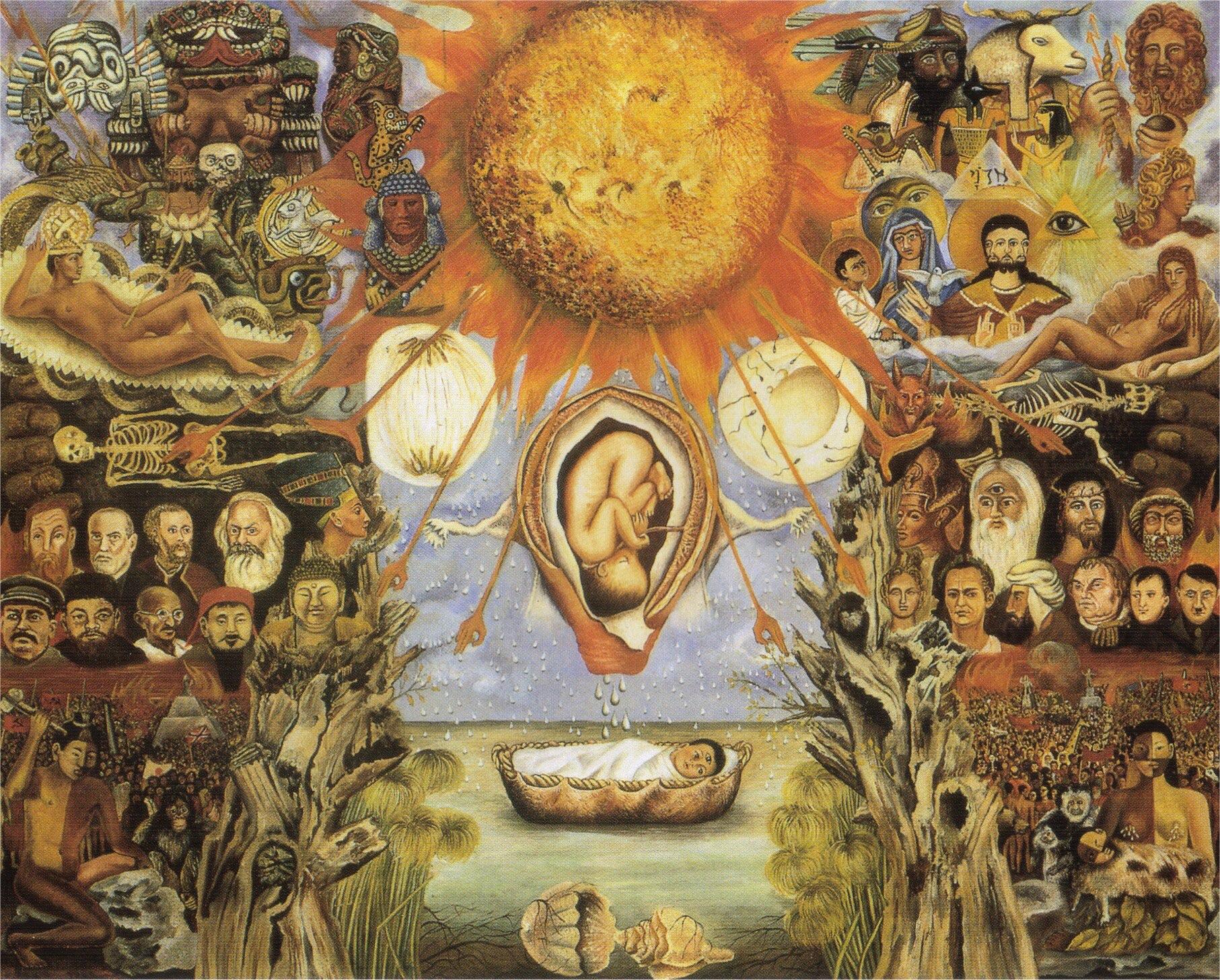
Part 1
It was truly beginning to become cold in the city the night he wrote the story. Theodore's mind wandered as he pulled a sweater on -- for hours now, he had been working on an assignment for The New Political Fiction Review, a small publication ran out of a state university. He didn't think much of the opportunity, and was mildly surprised upon news of his hire as he had forgotten applying in the first place. When he got the cream-colored envelope in the mail, it took him a moment before he could recall seeing the ad in the newspaper. It was the early morning, the light turning golden, his coffee in his hand, while browsing the Classifieds.
In stretched, cramped letters, seemingly designed for a much larger space, it read:
THE NEW POLITICAL FICTION REVIEW IS SEEKING WRITERS
$50/story
There was no more information save for the instructions at the bottom:
KINDLY MAIL RESUMÉ AND SAMPLES TO
Department of Physical Sciences
North Central College
30
N. Brainard Street Naperville, IL 60540
The rest of the ad space was blank, though Theodore remembered noticing an unusual texture to the image, one that gave it a quality he couldn't place. This stood out to him, as he prided himself on the cogency of his thoughts.
He had forgotten about it because it was so vague, vague enough to stink of desperation, of stacks of unsold magazines, a mildew-ridden office, of some sweaty Professor embroiled in a departmental rivalry. Nevertheless, $50 is $50 and so he sent several of his samples, one of which had been published several months ago in a small Midwestern science fiction magazine. He continued working as a line cook and put the possibility of rejection out of his mind.
Three weeks ago, he received word that he had been hired. Moreover,
he'd been paid a generous advance for 5 stories. Theodore had been
working on the story since then. He didn't mind writing about
politics, although he was sure many writers, and perhaps even line
cooks, may have shirked the topics. He followed his country's politics
quite closely. Theodore considered himself to be well-informed and
measured in his judgment. He had felt this way ever since graduating
university, where he majored in Philosophy. He remembered an
assignment in his junior year Ethics seminar where he was instructed
to extrapolate three sets of contemporary political positions from his
first principles, using a different ideology for each one. A flutter
of pride swept through his heart as Theodore recalled presenting his
project in front of the class. His reasoning was much better than his
classmates'.
It was late now, Theodore began to realize, as he gazed out of the window in his living room for perhaps the first time all day. The sky had taken on a deep, staticky blue, like some great energy was gathering, an electricity that hummed beneath the thick roils of clouds. Theodore felt lighter and satisfaction ran flush upon his skin. He quickly washed his face, brushed his teeth, and masturbated before withdrawing to his room, leaving the story untouched for the night. Tomorrow he would mail it to 30 N. Brainard Street Naperville, IL 60540.
For now, he would sleep.
10/29
I remember one day a drunk forced his way through the iron grate in front of the shop and he stepped where the cars usually stood, stumbling over the pulverized remains of his cigarette.
10/27
Sometimes we'd work special jobs for the city zoo and Lo' and I, broke, desperate, the only garbagemen without families, we'd volunteer together, ya know? And I learned, or at least, Lo' and I saw... that once a year the giraffes would drop dead. Like... KAPUT! Like a snap. And it was hush-hush, very grave when they came to us, the zoo officials. They pulled me and Lo' over and told us not to speak a word of it and to take the bodies out. They offered to pay us a little extra, something to give us some breathing room, which I felt good about thinking that this is some big scientific discovery. But I never saw anything on the TV about their study. And Lo... well Lo took that money and ran. Couldn't be a garbageman forever! He used to laugh at me as we hauled the dead giraffes across the rim of the enclosure, into the real world. That motherfucker... he would read on the shitter, you know that? Sometimes I'd catch a glimpse, he'd peek his damn cigarette out through the crack of the door, scruffy face buried away in some book about something you've never heard of. He was old and mean and smart as hell, I tell ya. Old, mean, and smart as hell.
10/26
Every day you touch me every day I feel you and I want you and I need you and I do things for you and I take the garbage to the curb behind the theatre in the parking lot that smells like the ocean. I used to be afraid of dogs gnashing their teeth in the churning water of the shadows and I took it for granted that I could take my trash to the trash heap and the garbage man could pick it up and take it to the landfill and it would rot there, they trucked it around the country figuring out what to do with it - Hell, we took it to the middle of nowhere, bumfuck Nebraska and for shits and giggles one time, get this, one time we dumped it there. Imagine that! Gunpowder breath, a god damn heap of trash in Ma's forgotten land. I looked at it and I tell ya... It was bigger than ever.